Diasporic Digital Discourse Analysis

Hargett’s Fugitive’s Heritage, Lived Experience & Dismal Swamp Discourse Narrative Methodology
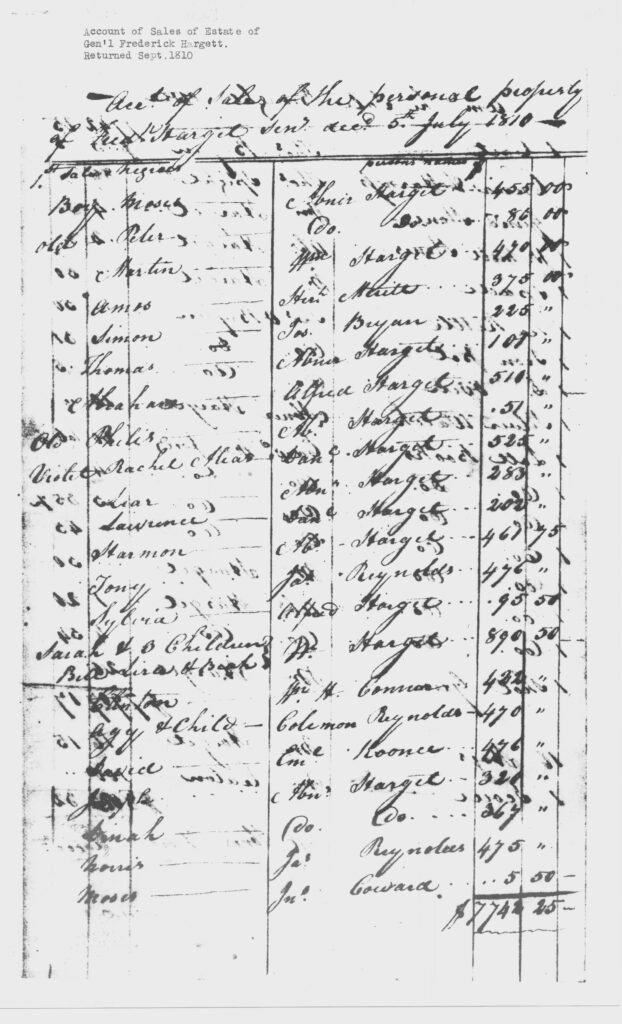
Estate Sale of Prof. Meme Hargett’s Patriarchal Lineage Relatives

Estate Sale Record, 1810

Gen’l Frederick Hargett

EnslavedPurchaser$
BenAnnie Hargett450
Old PeterCo.85
ArthurHargett420
JamesHester370
SimonBryan295
ThomasThos. Hargett107
Old EllisAlfred Hargett510
Violet Rachel & childJas. Hargett522
CeliaJohn Hargett380
LawrenceDanl. Hargett200
HammondGeo. Hargett461.75
TonyReynolds47
AlfredHargett95
Sarah & 3 childrenHargett89.50
Boy & childColeman Reynolds470
DanielE. Koonee86
HannahThos. Hargett324
MorrisJas. Reynolds470
MosesJno. Coward5.50

Total: $7,744.25

General Hargett

Critical Discourse Analysis: Estate Sale Ledger, 1810

Lexical Construction of Human Commodification. The language of the document reduces individuals to abbreviated entries, where first names function as sufficient identifiers within a system that denies full personhood. Terms such as “Old” operate as classificatory modifiers, attaching economic meaning to age. The absence of surnames for the enslaved, contrasted with the repeated and fully marked “Hargett” in the purchaser column, establishes a linguistic hierarchy that distinguishes ownership from objecthood. Within this discourse, identity is structurally minimized while ownership is repeatedly reinforced, demonstrating how lexical choices construct social hierarchy and normalize institutional power (Machin & Mayr, 2023).

Grammatical Structuring of Ownership and Transfer. The document is organized through a ledger format that mirrors transactional grammar rather than relational description. Each line functions as a complete unit of exchange, where the subject is implied rather than stated. The enslaved individual is positioned as the object of the sentence, while the purchaser occupies the position of grammatical authority. This structure eliminates narrative continuity and replaces it with transactional immediacy, reinforcing the normalization of human transfer as routine economic practice (Machin & Mayr, 2023; Barrett, 1995).

Visual and Spatial Encoding of Power. The three-column layout visually encodes hierarchy. Names of enslaved individuals are placed on the left, purchasers in the center, and monetary values on the right. This spatial arrangement culminates in valuation, directing the reader’s eye toward price as the final and most important element. The vertical stacking of entries produces a cumulative effect, where repetition normalizes the process and obscures the violence embedded within each transaction. The ledger format itself operates as a technology of erasure, flattening lived experience into uniform rows (Machin & Mayr, 2023; Coulombe, 2022).

Kinship Fragmentation and Controlled Recognition. Entries such as “Violet Rachel & child” and “Sarah & 3 children” reveal a partial acknowledgment of familial relationships. However, this recognition is immediately subsumed into grouped valuation, where kinship is not preserved but quantified. The grouping of mothers and children suggests an economic logic tied to reproduction, where relational bonds are acknowledged only insofar as they influence market value. This reflects a controlled recognition of lineage that does not protect family integrity but instead facilitates its commodification (Du Bois, 1908; Gutman, 1976).

Intra-Familial Circulation and Power Consolidation. The recurrence of the surname “Hargett” across the purchaser column indicates redistribution within a familial network. This reflects consolidation of power through internal circulation, reinforcing both economic control and lineage continuity among enslavers. The presence of additional surnames suggests an extended social and economic network, situating the transaction within a broader system of racialized property exchange and inherited power (Barrett, 1995; Coulombe, 2022).

Economic Stratification Through Age and Capacity. Price variation reflects valuation tied to perceived labor capacity. Lower values associated with individuals marked as “Old” indicate depreciation based on age, while higher values reflect peak labor exploitation. This stratification reveals a discourse in which human worth is calculated through productivity, reducing life stages to economic metrics and converting embodied existence into fiscal value (Machin & Mayr, 2023; Phillips, 2001).

Discourse of Normalization and Administrative Distance. The ledger’s tone is administrative and detached, devoid of affect or moral commentary. This absence normalizes the sale of human beings by presenting it as routine recordkeeping embedded within bureaucratic order. The document does not defend enslavement. It assumes enslavement as ordinary, which makes the discourse especially powerful because it converts violence into procedure (Machin & Mayr, 2023; Nichols, 1952).

Linkage to Diasporic Maroon Memory Frameworks. When placed alongside quantitative findings, particularly overlaps between Maroon Geographies, Lineage, and Freedom, the ledger operates as both evidence of dispossession and a site requiring reconstruction through alternative archives such as oral lineage and spatial memory. The fragmentation visible in the ledger underscores the necessity of Diasporic Maroon Memory Theory, which reads silence, rupture, geography, and lineage as evidence where formal archives encode loss (Hargett, 2025; King, 2020; Price & Price, 1983).

References

Barrett, L. (1995). African-American slave narratives: Literacy, the body, authority. American Literary History, 7(3), 415–442.

Coulombe, J. L. (2022). Let’s stop calling them slave narratives: Anagrammatical Blackness in our academic discourse. College English, 85(2), 107–132.

Du Bois, W. E. B. (1908). The Negro American family. Atlanta University Press.

Gutman, H. G. (1976). The Black family in slavery and freedom, 1750–1925. Pantheon Books.

Hargett, M. E. (2025). Marooned: A western frontier Dismal Swamp narrative. The Scholarship Without Borders Journal, 4(1), Article 6.

King, L. J. (2020). Black historical consciousness as counter-memory and oral tradition. Social Studies Review, 84(4), 35–52.

Machin, D., & Mayr, A. (2023). How to do critical discourse analysis: A multimodal introduction (2nd ed.). SAGE.

Nichols, C. H., Jr. (1952). Slave narratives. Negro History Bulletin, 15(6), 107–114.

Phillips, J. (2001). The perennial value of the slave narrative. The Hudson Review, 54(2), 335–340.

Price, R., & Price, S. (1983). First-time: The historical vision of an Afro-American people. Johns Hopkins University Press.

This Researcher’s search for Heritage and Diasporic Understanding on the Patriarchial side led to a Rich DIASPORIC CULTURE AND HERITAGE OF SELF leading to an inclusive Matriculation of LMS Development!
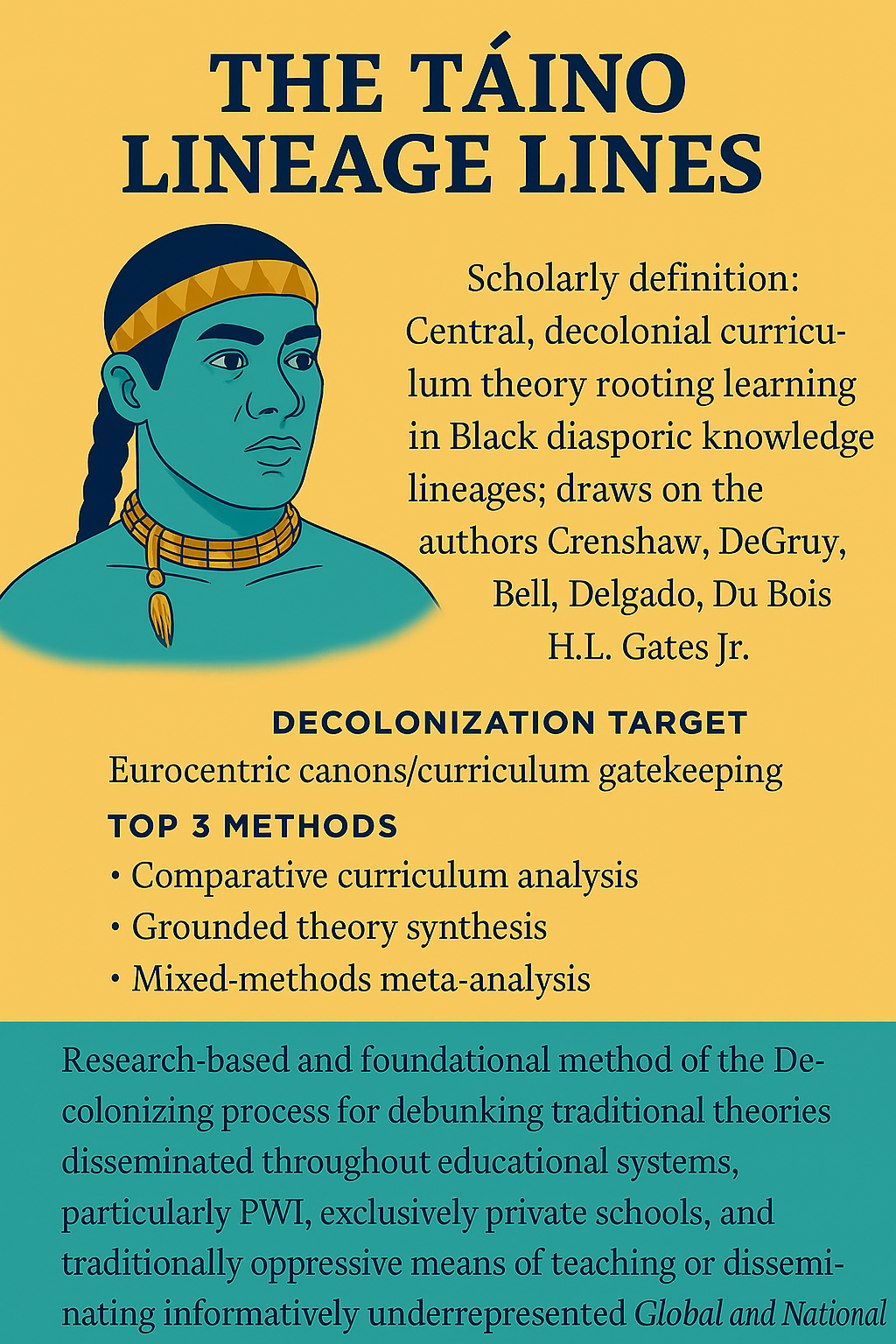
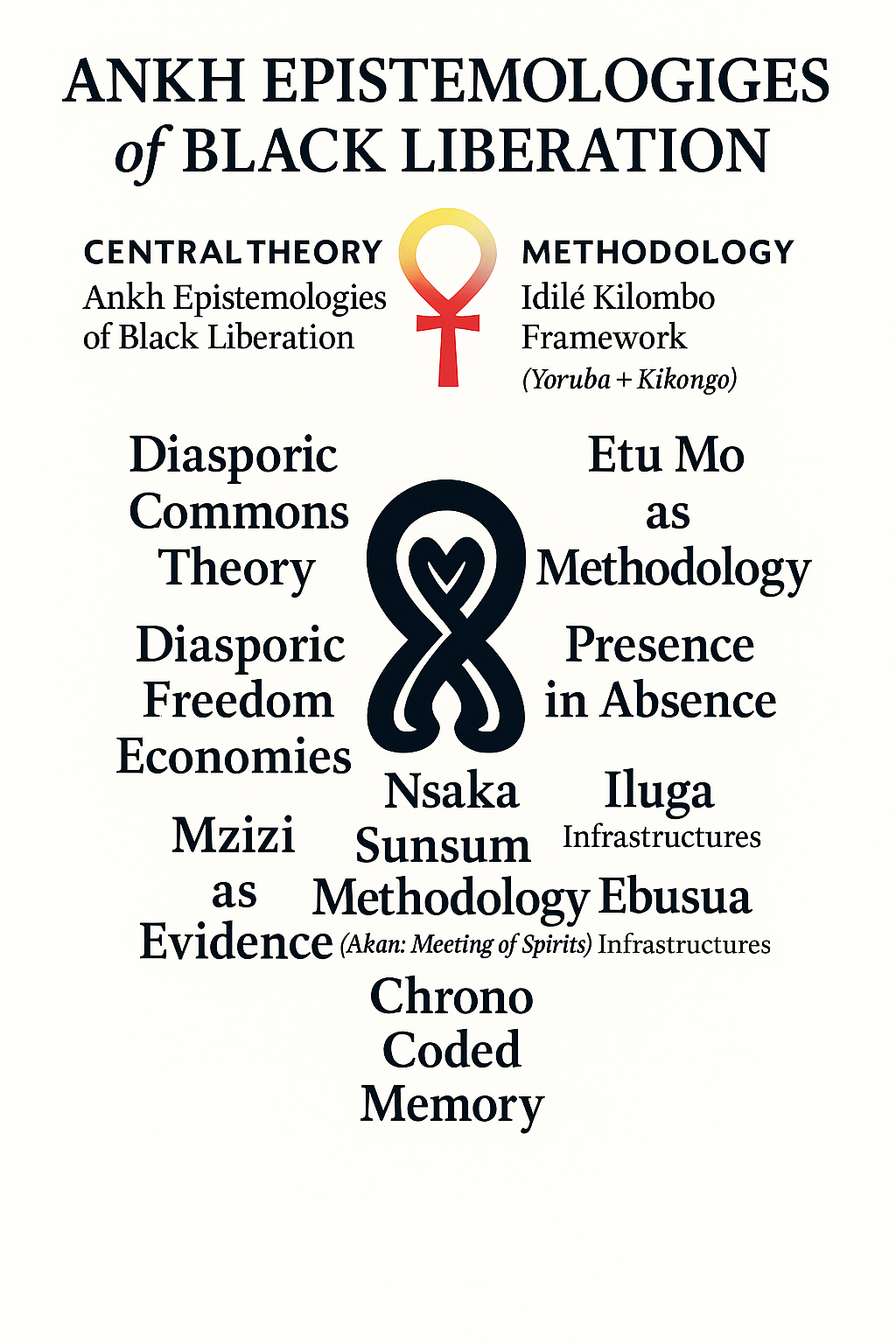
Taino Lineage Lines
Taino Lineage Lines
ANKH Family of Liberation

Systemic Education Theories

Argument:

  • Persisting: Critics point to the continued…
  • This focus can lead to…

The Dismal Swamp Narrative (cont.): This Researcher

  • Persisting “Historical Paper Genocide: Critics point to the continued sytematic enialation attempts towards Diasporic and Indigenous cultures, Histories, and stories.
  • But the 1 %: Kept Excellent Horistorical records, thus, the continous need to insure “illiterate Members of Societies and a generational underclass legacy!

New Research on Diasporic Education and Learning Tools; from the Diasporic Maroon Memory Theoretical Families

Presented by Assoc. Prof. Meya E. Hargett, M.A.

FBA/ADOS vs Black Indigenous
AspectFBA/ADOSBlack Indigenous
Primary focusPolitical advocacy for reparations specifically for U.S. descendants of enslaved people.Intersectional identity rooted in shared Black and Native American heritage and history.
LineageExclusively traced to those enslaved within the United States.Combines Black (African) and Native American ancestry.
InclusivityDefines a boundary that excludes Black immigrants from its reparations claim.Inclusive of multiple ancestries and challenges monolithic racial categories.
Critique of each otherSome proponents express hostility toward other Black groups, including those claiming Indigenous heritage, viewing them as competitors for resources or as undermining an exclusive claim.Often view the exclusionary, lineage arguments as continuing settler colonial and xenophobic thinking that creates division within the broader Black community.
Relationship to landFrames Black Americans as foundational in the U.S. but typically does not emphasize ties to pre-colonial land claims the way Indigenous sovereignty movements do.Direct connection to land through Native American ancestry and tribal affiliations, aligned with Indigenous sovereignty and Land Back movements.

COLONIALISM TRIZ EFFECT

“Where improving one aspect causes a negative effect” defines a technical contradiction. It describes an inherent and mutually dependent conflict between two opposing cultures within a system, the Oppressor vs. the Oppressed, where a positive change to one parameter simultaneously degrades another.

Unlike a simple trade-off, which accepts compromise, a Diasporic Contradiction is treated as a problem to solve without sacrificing one aspect for another.
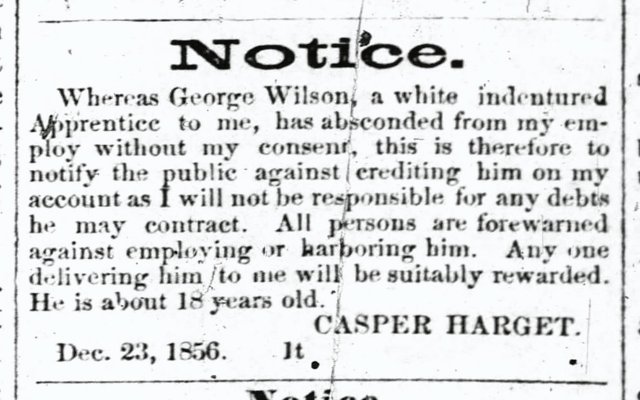
White Indentured Servant to Black Hargett, most likely Passing Hargett need to verify
Followed the money of Abolitionist in “Autographs For Freedom.”